Termite activity in Placer County centers on two distinct wood-destroying biological species: Reticulitermes hesperus (western subterranean termite) and Incisitermes minor (western drywood termite). In Rocklin…
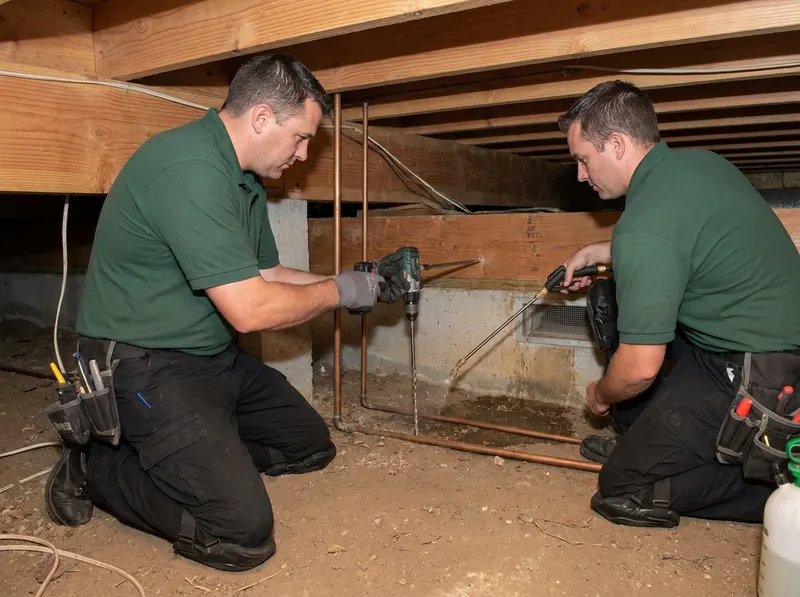
Termite activity in Placer County centers on two distinct wood-destroying biological species: Reticulitermes hesperus (western subterranean termite) and Incisitermes minor (western drywood termite). In Rocklin developments such as Whitney Ranch and Stanford Ranch, post-tension slab foundations frequently settle against exterior stucco expansion joints, creating hidden 1/16-inch gaps where subterranean termite mud tubes enter framing studs undetected behind baseboards. Older established structures near Clover Valley, Midas, and the granite outcroppings along the Sunset Whitney Recreation Area (Old SWRA) frequently feature raised crawlspace foundations and exterior architectural wood features that experience damp soil contact, encouraging ground-nesting subterranean colonies to migrate into subfloor joists.
Selecting the correct mitigation method depends on biological identification and infestation boundaries. If mud shelter tubes or subterranean worker activity appear along interior foundation walls, a perimeter non-repellent liquid soil treatment (such as Termidor SC fipronil formulations) applied at 4 gallons per 10 linear feet creates an undetectable elimination barrier. If drywood termite fecal pellets (frass) accumulate beneath window sills or exposed attic rafters in neighborhoods like Whitney Oaks or Fairway Heights without ground contact, targeted structural borate applications or direct wood-injection methods isolate the gallery without requiring building evacuation. Liquid soil barriers do not eradicate aerial drywood colonies; conversely, direct timber injections cannot prevent subterranean colonies nesting 4 feet below soil level from attacking untreated plates. Grounding treatment choices in structural testing prevents unnecessary chemical dispersal while securing the building envelope.
Inspections follow a standardized physical sequence. 1. Technicians probe sill plates, subfloors, and joist pockets inside crawlspaces and along perimeter stem walls. 2. Attics, rafter tails near fascia boards, and roof valleys are checked for drywood frass accumulation and kick-out holes. 3. Technicians measure perimeter linear footage to calculate exact solution volumes, generating an objective structural report. This assessment requires no recurring 12-month service contract, operates using low-odor materials, and avoids fumigation displaced-occupancy requirements whenever infestations remain accessible for localized liquid or borate treatments.
Every job gets a firm, written price after a free on-site visit.
Tell us about your termite inspection and treatment job in Rocklin and we'll send a clear, written quote, usually the same day.
 Virello Pest Management